ICICS 2026
28th International Conference on Information and Communications Security
Fukui, Japan
| 27-30 October, 2026

Keynote Speakers
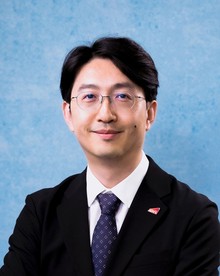
AI x Cybersecurity: Navigating Challenges and Embracing Opportunities
Professor Cong Wang
City University of Hong Kong, Hong Kong
Abstract
As AI becomes deeply embedded across the digital stack, the intersection of AI and security has become a critical frontier. This talk examines this evolving landscape, dissecting the expansion of attack surfaces within AI infrastructure, the weaponization of AI for sophisticated exploitation, and the strategic roadmaps required to secure our future. We conclude with a deep dive into recent advancements from CityUHK CS focused on the synergy of AI, security, and trustworthy systems.
Biography: Cong Wang is a Chair Professor and the Head of Computer Science Department at City University of Hong Kong. His research spans data security and privacy, AI systems and security, and blockchain and decentralized application security. He is an IEEE Fellow, a Founding Member of the Hong Kong Young Academy of Sciences, and a co-recipient of the 2024 BOCHK Science and Technology Innovation Prize. He has served as the Editor-in-Chief of IEEE Transactions on Dependable and Secure Computing.
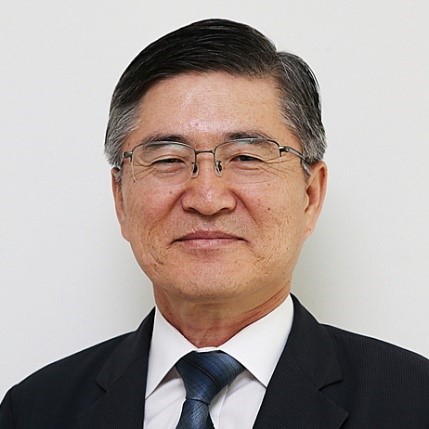
Beyond Classical Cryptography: Neural Leakage, Post-Quantum Signatures, and the Security Frontier
Professor Kwangjo Kim
Korea Advanced Institute of Science and Technology, Korea
Abstract
Cryptography is undergoing two fundamental shifts: the emergence of neural computation as a new implementation paradigm and the transition toward post-quantum security. This talk explores these challenges and their implications for modern cryptography. Cryptography is undergoing two fundamental shifts: the emergence of neural computation as a new implementation paradigm and the transition toward post-quantum security. This talk explores these challenges and their implications for modern cryptography.
First, we investigate natural neural realizations of symmetric cryptography, where Boolean operations such as XOR and S-boxes are represented by ReLU-based neural operators. Such representations may introduce geometric leakage exploitable through carefully constructed input perturbations. Using AES as a case study, we present neural-leakage techniques that achieve master-key recovery for AES-128, AES-192, and AES-256 in our experimental setting, raising new questions about cryptographic security when computation moves from discrete to continuous representations.
Second, we address post-quantum security through SOLMAE, a lightweight NTRU-lattice-based signature designed for efficient implementation in resource-constrained environments, and discuss its progress toward Korean national standardization.
Finally, we outline future research directions and open challenges in both areas: extending neural-leakage analysis to broader classes of symmetric primitives and developing secure neural cryptographic implementations, while advancing efficient, implementation-secure, and globally deployable post-quantum signatures. Together, these directions highlight the need to rethink cryptographic security in the emerging AI and quantum era.
Biography: Prof. Kwangjo Kim is an Emeritus Professor at the Korea Advanced Institute of Science and Technology (KAIST), Republic of Korea, and an Adjunct Professor at Cleveland State University, USA. He is a Fellow of the International Association for Cryptologic Research (IACR) and Honorary President of the Korea Institute of Information Security and Cryptology (KIISC). His research spans the theory and practice of cryptography and information security, with current interests including post-quantum cryptography and AI-assisted cryptanalysis of block ciphers. He became the first Korean IACR Fellow in 2017, in recognition of his research achievements and leadership in the cryptographic community. He served on the IACR Board of Directors from 2000 to 2004 and chaired the Asiacrypt Steering Committee from 2005 to 2008. Throughout his career, he has contributed to advancing cryptographic research, international collaboration, and the education of information security researchers. updated